Decoding Modern Defense Frameworks and Strategic Operations Through WarOpsX
Introduction
Scholars and learners routinely encounter obstacles when searching for clear explanations concerning how security goals transform into practical operational plans. Standard textbooks typically examine disconnected elements like logistics, technology, or history separately, which leaves students to connect missing pieces independently. Advanced educational platforms solve this challenge by organizing essential topics into unified study modules. Investigating these fundamental principles allows individuals to develop a deeper grasp of modern security landscapes. Let us discover how structured learning enhances your understanding of defense ecosystems today.
Exploring Defense Studies and Modern Security Concepts
Defense studies encompass a broad academic inquiry into armed forces, statecraft, alliance dynamics, and conflict resolution. Scholars in this field examine how deterrence theory, diplomacy, and defense economics shape international stability. Modern security concepts extend far beyond traditional state-on-state combat to include economic security, environmental pressures, and transnational threats. By evaluating historical precedents alongside current geopolitical trends, students gain critical analytical tools for assessing global risk. This multidisciplinary approach encourages learners to look past headlines and understand the structural drivers of international friction. Engaging with defense studies fosters informed citizenship and rigorous policy analysis.
Understanding Military Strategy and Strategic Decision-Making
Military strategy forms the overarching framework connecting national policy goals with the deployment of military instruments. Leaders use strategic planning to align political objectives with available resources while managing inherent risks. Strategic decision-making demands a careful evaluation of geographical factors, economic capacity, and potential adversary behaviors. Furthermore, leaders must continuously adapt their strategies as geopolitical landscapes shift and new technologies emerge. Studying these concepts allows researchers to analyze why certain campaigns succeed while others falter under pressure. Ultimately, effective strategy prevents miscalculation and ensures that every military action supports long-term national interests.
Understanding Military Operations Beyond Tactical Combat
Military operations involve far more than frontline combat maneuvers; they represent complex orchestrations of planning, movement, and sustainment. Operational art bridges the gap between grand strategy and tactical engagements by sequencing multiple activities toward a shared objective. Planners must coordinate troop movements, secure communication lines, and manage multinational alliances with precision. Without a thorough grasp of operational concepts, observers often misunderstand the immense coordination required to move forces safely across regions. Education in this area focuses heavily on synchronization, risk management, and decision-making under uncertainty. Consequently, students learn to appreciate the administrative and intellectual rigor behind large-scale institutional actions.
How Military Logistics Supports Organizational Readiness
Logistics remains the foundational pillar determining whether military strategies succeed or collapse in real-world scenarios. Military logistics encompasses complex supply chains, vehicle maintenance schedules, fuel distribution networks, and medical infrastructure. Without a resilient logistical backbone, even the most technologically advanced forces cannot sustain operations beyond initial engagements. Researchers study how historic supply failures shaped modern sustainment doctrines and global transportation hubs. Maintaining high organizational readiness requires constant forecasting, resource management, and contingency planning across all branches. Understanding logistics reveals the hidden logistical friction shaping strategic outcomes in every era.
Understanding Command and Control Systems
Command and control systems provide the vital nervous network through which leaders exercise authority and direct subordinate units. These systems combine human leadership structures, communication protocols, and advanced information technology to maintain situational awareness. Effective command frameworks empower commanders at all levels to make rapid decisions while maintaining alignment with overall objectives. Modern command structures must process vast quantities of data quickly without falling victim to information overload. Studying these networks helps analysts understand how organizations preserve unity of effort across vast geographic distances. Communication reliability and clear hierarchy remain essential components of successful organizational performance.
Exploring the Role of Defense Technology
Defense technology continuously reshapes how organizations operate, communicate, and protect their personnel in complex environments. Innovations ranging from advanced sensors and communication nodes to unmanned systems and artificial intelligence tools influence modern defense ecosystems. However, technology alone does not guarantee strategic success; it must integrate seamlessly with existing doctrines and human training. Researchers examine both the advantages and vulnerabilities introduced by digital transformation and automated systems on the institutional level. Evaluating these technological trends requires a balanced perspective on innovation cycles, research investments, and ethical considerations. Understanding tech integration prepares learners for future shifts in security capabilities.
Learning From Military History and Strategic Evolution
Military history offers a rich laboratory for examining recurring patterns in human conflict, technological adoption, and leadership. By studying past campaigns, scholars identify timeless principles of war alongside obsolete tactics that failed to adapt. Historical analysis encourages critical thinking by showing how cultural, economic, and political contexts influence military effectiveness. Rather than memorizing dates and battle names, modern education focuses on the underlying causes of strategic transformation. Learning from past mistakes helps contemporary planners avoid repeating historical blunders in emerging operational environments. History remains an indispensable guide for anyone seeking to master modern defense studies.
Understanding Military Organizational Structure
Military organizational structure defines the formal hierarchy, command relationships, and unit configurations enabling institutional functionality. Armies, navies, and air forces rely on standardized organizational models ensuring clear accountability and rapid scalability. Joint force structures bring multiple services together under unified commands to address multi-service operational challenges effectively. Understanding these structures requires examining rank systems, staff duties, and the delegation of authority from strategic headquarters down to tactical units. A clear grasp of organizational design helps researchers evaluate how military institutions adapt their internal frameworks to meet evolving security demands. Proper organization ensures operational coherence across diverse functional domains.
Exploring Multidomain Operations Across Modern Defense Environments
Multidomain operations represent the synchronized application of capabilities across land, maritime, air, space, and cyberspace environments. Modern conflicts rarely occur in a single physical realm, requiring planners to integrate actions across multiple operational dimensions simultaneously. For instance, cyber capabilities and space-based communication links directly influence ground and naval maneuvers. Understanding this interconnectedness helps analysts evaluate how contemporary defense forces achieve overmatch against capable adversaries. Multidomain thinking breaks down traditional service stovepipes and encourages holistic problem-solving among defense professionals. This comprehensive perspective is essential for navigating the complexities of twenty-first-century security challenges.
Understanding Intelligence Surveillance and Reconnaissance
Intelligence surveillance and reconnaissance systems supply decision-makers with the critical information needed to reduce uncertainty on the ground. This functional area involves gathering raw data from diverse sources, analyzing patterns, and disseminating actionable insights to appropriate commanders. Effective monitoring capabilities enable organizations to anticipate adversary movements, protect friendly assets, and allocate resources efficiently. However, managing the sheer volume of collected data presents significant analytical and technological challenges for modern institutions. Studying intelligence structures emphasizes the importance of objective analysis, verification processes, and timely reporting in strategic planning. Information superiority often dictates the pace and outcome of strategic initiatives.
How Strategy, Technology, Leadership, and Logistics Work Together
| Element | Primary Focus | Role in Defense Systems |
| Strategy | Objectives & Policy | Connects national goals with available resources and risk management. |
| Technology | Innovation & Tools | Enhances capabilities through sensors, communications, and modern systems. |
| Leadership | Command & Decisions | Guides organizations, maintains morale, and directs operational execution. |
| Logistics | Sustainment & Readiness | Manages supply chains, transportation, maintenance, and resource flow. |
Comparing Traditional and Modern Defense Systems
| Feature | Traditional Defense Systems | Modern Defense Systems |
| Operational Scope | Primarily single-domain land or sea focus | Integrated multidomain operations across land, air, sea, space, and cyber |
| Information Flow | Hierarchical, physical dispatch and radio | Real-time digital networks and automated data processing |
| Technological Integration | Mechanized platforms and analog sensors | Software-driven systems, AI support, and autonomous tools |
| Logistical Complexity | Linear supply lines and regional depots | Globalized supply chains, predictive maintenance, and agile sustainment |
How Students and Researchers Can Study Defense Concepts
Studying defense concepts effectively demands a methodical approach blending foundational reading with continuous analytical practice. Learners should begin by mastering core vocabulary related to strategy, logistics, and organizational theory before tackling specialized subjects. Engaging with primary source documents, historical case studies, and peer-reviewed analysis builds a robust intellectual foundation. Furthermore, discussing complex security dilemmas with peers enhances critical thinking and exposes learners to diverse strategic perspectives. Establishing a consistent study routine ensures long-term retention and deep comprehension of intricate defense topics.
- Establish core foundations: Read standard texts on military history, strategy terminology, and political science principles.
- Analyze historical case studies: Examine past campaigns to identify recurring principles of logistics and leadership.
- Track contemporary security trends: Follow reputable defense journals and policy research institutes for current analysis.
- Engage in structured discussions: Participate in academic seminars or study groups to test analytical hypotheses.
Building a Better Understanding of Modern Military Systems
Developing a comprehensive grasp of modern military systems requires looking past sensationalized media reports to examine institutional realities. Researchers must analyze how training regimens, budgetary constraints, and industrial capacity influence overall military capability. Recognizing the limitations and strengths of different organizational models prevents simplistic conclusions about global power dynamics. Building this knowledge base takes time, patience, and access to well-organized educational resources. Informed observers contribute much more constructively to public debates surrounding defense policy and national security.
How WarOpsX Supports Defense and Strategy Learning
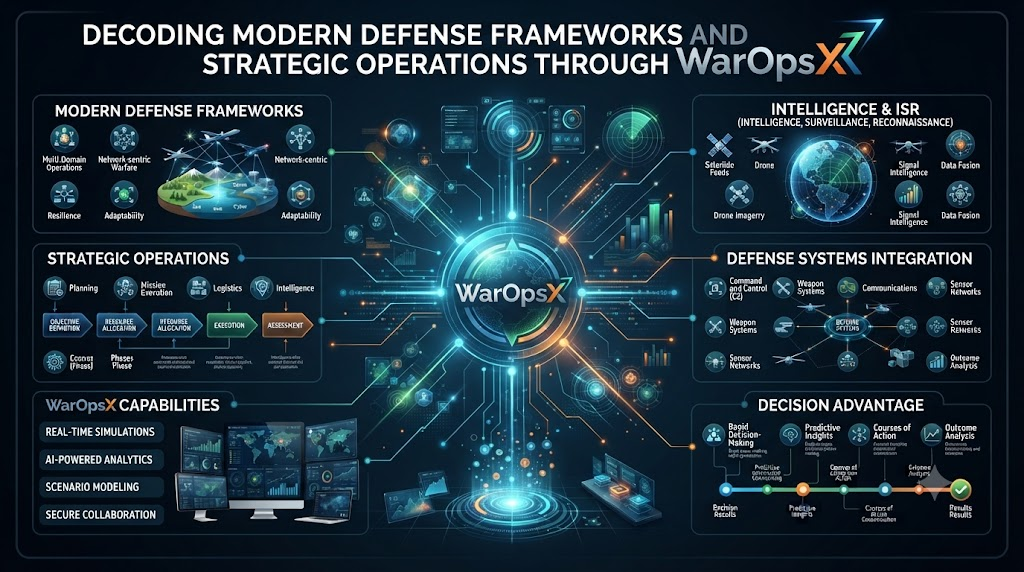
WarOpsX operates as a dedicated educational knowledge platform designed to simplify the study of military strategy and defense systems. By organizing complex topics into structured modules, WarOpsX helps students and researchers navigate logistics, technology, and history effortlessly. The platform provides clear explanations of operational concepts without delving into tactical combat instructions. Learners find valuable resources for exploring organizational structures and multidomain environments in one convenient digital space. Utilizing platforms like WarOpsX accelerates the learning process for anyone seeking professional insight into global defense studies.
Why Structured Defense Information Is Becoming More Important
The sheer volume of online information makes finding accurate, objective, and well-structured educational content increasingly challenging for learners. Unverified claims and fragmented analyses often obscure the fundamental principles governing international security and military operations. Structured educational resources combat this problem by presenting verified historical context and institutional realities clearly. As global security dynamics grow more intricate, the demand for rigorous, policy-focused learning tools continues to expand. Providing organized knowledge empowers the next generation of researchers and defense enthusiasts to analyze complex challenges with confidence.
Frequently Asked Questions About WarOpsX
What core topics does WarOpsX cover for its readers?
WarOpsX covers military strategy, defense studies, logistics, command systems, technology, history, organizational structures, and multidomain operations through structured educational resources.
Does WarOpsX provide tactical combat instructions or weapon training?
No, the platform focuses strictly on high-level education, strategy, history, logistics, and organizational concepts rather than tactical combat or operational execution.
Who can benefit most from studying resources on WarOpsX?
Students, researchers, defense enthusiasts, policy learners, and professionals looking for structured insights into modern security environments benefit greatly from the platform.
How does WarOpsX approach the study of military logistics?
The platform explores supply chains, transportation, resource management, and sustainment systems required to support large-scale organizations effectively.
Are historical campaigns examined within the WarOpsX framework?
Yes, the platform examines historical organizations, campaigns, and technological evolution to help readers understand how past events influence modern defense systems.
What are multidomain operations as explained on the platform?
Multidomain operations refer to the synchronized application of capabilities across land, maritime, air, space, cyber, and information environments.
How does WarOpsX cover command and control systems?
Coverage includes communication protocols, information management, leadership structures, and situational awareness frameworks used by defense organizations.
Does WarOpsX require a subscription to access its educational guides?
Access models and specific feature availability vary by organization or context depending on platform updates and user requirements.
How can students use WarOpsX for academic research?
Learners use the structured guides, historical overviews, and conceptual breakdowns as a reliable starting point for broader defense studies and policy analysis.
What is the primary educational mission of WarOpsX?
The primary mission is to serve as a comprehensive knowledge destination for understanding defense strategy, military systems, and modern security concepts.
Final Takeaways
Mastering comprehensive defense architectures grants you exceptional clarity regarding international security mechanics. Implementing a rigorous framework of strategic knowledge ensures that you evaluate current geopolitical shifts accurately. Cultivating ongoing intellectual curiosity broadens your analytical perspective and solidifies your comprehension of global stability. Explore these essential defense topics today to establish a permanent educational advantage.
Leave a Reply