Understanding Your Gut: A Modern Patient’s Guide to Digestive Healthcare
Introduction
Exploring internal wellness often brings confusion because the human body features intricate biological networks working simultaneously. Individuals and families continuously look for straightforward explanations covering physical warning signs, medical illnesses, therapeutic interventions, diagnostic examinations, or clinical experts. Securing dependable answers boosts your personal confidence prior to attending a medical consultation. Certified clinicians must always deliver your official medical recommendations and oversight. Informational platforms like GastroHospitals.com streamline investigating gastrointestinal wellness and discovering reliable local professionals. This thorough guide presents core concepts to help you comprehend your belly and digestive tract.
Part One: Foundations of Gastroenterology
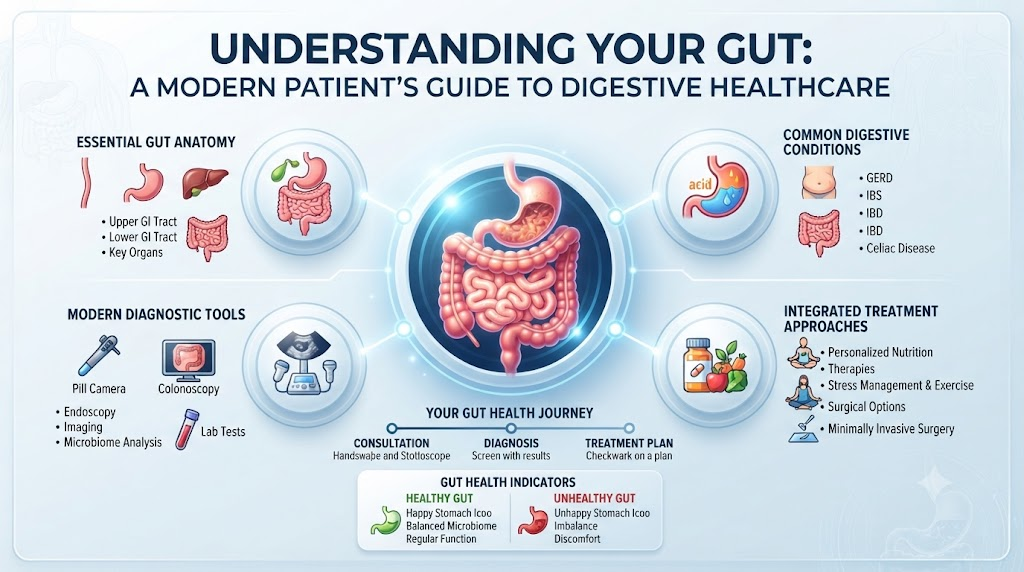
Gastroenterology defines the medical discipline investigating your body’s food-processing mechanisms. This essential biological system manages every meal you consume throughout your daily routine. It encompasses primary internal structures like your esophagus, stomach, intestines, colon, liver, gallbladder, and pancreas. Every individual organ fulfills a specific function to maintain your overall physical vigor. Sustaining robust digestive health provides boundless energy and daily comfort. Recognizing unexpected tummy distress early prevents minor issues from escalating into major health complications.
| Digestive Organ | Primary Physiological Function | Clinical Focus Area |
|---|---|---|
| Stomach | Breaks down food using gastric acids | Acid regulation |
| Intestines | Absorbs vital nutrients into bloodstream | Nutritional wellness |
| Liver | Filters metabolic toxins from blood | Hepatic care |
Part Two: Specialist Roles and Frequent Conditions
The Daily Work of a Gastroenterologist
A gastroenterologist operates as a medical specialist focusing entirely on digestive health. These experts complete intensive clinical training to evaluate intricate stomach and bowel conditions. They assist patients experiencing persistent abdominal distress or long-term gastrointestinal diseases. Physicians routinely analyze liver complications, abdominal pain, and bowel irregularities. They also perform specialized diagnostic evaluations to inspect your internal organs directly. Your personalized care plan always matches your unique physiological profile and medical requirements. Consulting a qualified specialist establishes a clear pathway toward enduring physical recovery.
Identifying Common Digestive Disorders
Digestive disorders comprise health conditions altering how your body processes nourishment. Many individuals encounter frequent challenges like acid reflux or chronic GERD. Additional concerns involve stomach infections, liver ailments, and inflammatory bowel diseases. Symptoms and effective therapies differ significantly because every person’s body reacts uniquely. Experiencing a brief stomachache does not automatically indicate a severe underlying disease. However, monitoring persistent bodily signals remains a wise preventative health strategy. Discussing lingering symptoms openly with your medical team ensures accurate diagnoses.
Part Three: Modern Therapeutic Methods and Clinical Procedures
Navigating Treatment Options
Gastroenterology treatments encompass diverse methods physicians employ to resolve tummy ailments. Appropriate therapies always rely on your specific medical diagnosis and physical constitution. Doctors frequently initiate care using mild medications or targeted nutritional modifications. Sometimes, simple lifestyle adjustments like eating smaller portions yield powerful improvements. Other situations require specialized clinical procedures or surgical interventions to restore balance. Patients should never attempt guessing or prescribing their own personal care regimens. Collaborating with trained medical professionals guarantees safe and effective healing.
| Evaluation Category | Critical Factors to Inspect |
|---|---|
| Clinical Units | Specialized digestive departments and multidisciplinary care teams |
| Doctor Qualifications | Board certifications and empathetic communication approaches |
Condition-Specific Interventions
- Gastroenteritis Care: Gastroenteritis describes a prevalent stomach infection causing sudden physical distress. Initial treatment strategies emphasize fundamental home care, rest, and fluid replenishment. Physicians recommend consuming plenty of clear liquids to replace lost hydration safely.
- GERD Management: GERD occurs when stomach acids flow backward into the upper esophagus. Eating smaller meals and avoiding spicy foods reduces acid flare-ups significantly. Doctors may also prescribe safe medications to lower internal stomach acid levels.
- Inflammatory Bowel Disease (IBD): Inflammatory bowel disease represents a collection of chronic gut-swelling conditions. Doctors deploy targeted anti-inflammatory drugs, immune-modulating agents, and nutritional support to manage these illnesses.
- Liver Disease Management: Liver disease involves medical conditions impairing normal liver functions and filtration processes. Clinical evaluations guide decisions regarding lifestyle changes, antiviral medications, or surgical interventions.
- Colonoscopy Procedure: A colonoscopy procedure allows a specialist to inspect your large intestine. The process requires thorough preparation instructions to clear the bowel completely before the doctor utilizes a slender, flexible, illuminated scope.
- Gastrointestinal Surgery: Gastrointestinal surgery involves operative procedures addressing severe digestive tract complications. Surgeons perform these operations to correct physical blockages, repair tissue, and restore normal function.
Part Four: Healthcare Research Strategies and Appointment Prep
Evaluating Facilities and Asking Questions
Identifying premier medical centers for digestive care demands careful planning and research. Start by examining institutional departments, specialized units, and advanced technology offerings. Bringing targeted inquiries to your appointment maximizes your visit value:
- What underlying factors trigger my persistent digestive symptoms?
- Which specific diagnostic tests do I require right now?
- What steps occur during the recommended medical examination?
- What potential treatment avenues should we explore together?
Avoiding Common Mistakes
Navigating health data online frequently leads to common analytical errors. Recognizing these pitfalls protects your wellbeing and improves your research accuracy:
- Self-diagnosing based on internet searches generates unnecessary panic. Always consult a certified physician.
- Delaying care for worsening symptoms allows conditions to worsen. Seek prompt professional evaluation.
- Trusting unverified wellness claims lacks scientific backing. Rely strictly on reputable medical portals.
- Disregarding personal medical history overlooks past data that dictates current needs. Document your complete health background beforehand.
Appointment Preparation Roadmap
- Document your primary physical symptoms and concerns clearly.
- Record the exact timeline detailing when symptoms first appeared.
- Compile a complete list of all medications and supplements you take.
- Gather relevant historical medical records and test results.
- Write down a prioritized list of questions for your physician.
Platforms like GastroHospitals.com function as intuitive discovery tools for healthcare navigation. The website connects patients, families, and caregivers with hospital and specialist directories while explaining complex disorders in clear terms.
Frequently Asked Questions
Trained gastroenterologists examine and treat complex ailments affecting the human digestive system.
Specialized practitioners evaluate issues involving the stomach, intestines, liver, and pancreas. They perform diagnostic scopes and design targeted therapeutic plans to restore optimal gut health.
Digestive disorders encompass various medical conditions disrupting normal gastrointestinal tract performance.
These problems affect any anatomical segment stretching from the esophagus to the colon. Common examples involve acid reflux, infectious gastroenteritis, and chronic bowel inflammation.
Physicians form standard medical treatments using dietary modifications, lifestyle adjustments, and pharmaceutical interventions.
Specialists also utilize specialized endoscopic procedures to diagnose or treat localized gut issues. Ideal therapies depend entirely on individual diagnoses and overall health statuses.
Effective care for gastroenteritis relies on hydration maintenance, resting, and supportive symptom management.
Patients consume electrolyte-rich fluids to counteract losses from vomiting or diarrhea. Severe dehydration cases necessitate direct clinical supervision and intravenous fluids.
Management of GERD centers on minimizing stomach acid exposure within the esophagus.
Physicians advise eating smaller portions, avoiding trigger ingredients, and elevating head positions during sleep. Acid-reducing prescription medications provide relief when conservative modifications prove insufficient.
Specialized medical management and professional oversight dictate successful treatment for inflammatory bowel disease.
Doctors deploy targeted anti-inflammatory drugs, immune-modulating agents, and nutritional support. Advanced cases may require surgical interventions to remove damaged intestinal segments.
Successful reversal of hepatic dysfunction depends on addressing distinct underlying pathologies during liver disease treatment.
Clinical evaluations guide decisions regarding lifestyle changes, antiviral medications, or surgical interventions. Regular diagnostic monitoring remains vital for safeguarding liver tissue.
Internal colonic tissue becomes visible through illuminated flexible tubes during a colonoscopy.
Patients follow strict dietary and laxative preparation protocols to clean the bowel beforehand. The diagnostic test facilitates early polyp detection and tissue biopsy collection.
Severe anatomical concerns find resolution through operative interventions targeting digestive system organs.
Surgeons perform these procedures to treat advanced pathologies, obstructions, or structural abnormalities. Expected outcomes and recovery timelines vary based on individual patient characteristics.
Evaluating departmental specialization, technology, and clinical teams highlights top medical facilities.
Patients look for hospitals offering comprehensive digestive disease centers and verified patient resources. Objective metrics provide superior guidance compared to casual reputation.
Healthcare professionals must evaluate persistent, recurring, or worsening digestive symptoms promptly.
Warning signs such as unexplained weight loss or severe pain require immediate investigation. Professional evaluations ensure correct diagnoses and safe therapeutic courses.
Educational content regarding gastrointestinal conditions populates digital resources like GastroHospitals.com.
The website assists users in discovering specialized hospitals and qualified medical professionals. This platform empowers patients to navigate digestive healthcare with confidence.
Final Thoughts on Your Care Journey
Reaching long-term gastrointestinal wellness relies on numerous interconnected organs and unique physiological variables. Licensed gastroenterologists accurately diagnose symptoms and formulate safe patient care strategies. Appropriate medical treatments always reflect individual clinical assessments rather than generalized solutions. Invasive medical procedures demand careful oversight from qualified healthcare practitioners. Institutional research should prioritize relevant department capabilities and objective medical facts. Patients must discuss personal health concerns directly with certified physicians. Portals like GastroHospitals.com offer valuable assistance throughout your healthcare discovery journey.
Leave a Reply